Expectimax
- 问题:当对手不是总是最优、或者游戏包含随机性(dice/cards) 时,Minimax 太悲观。
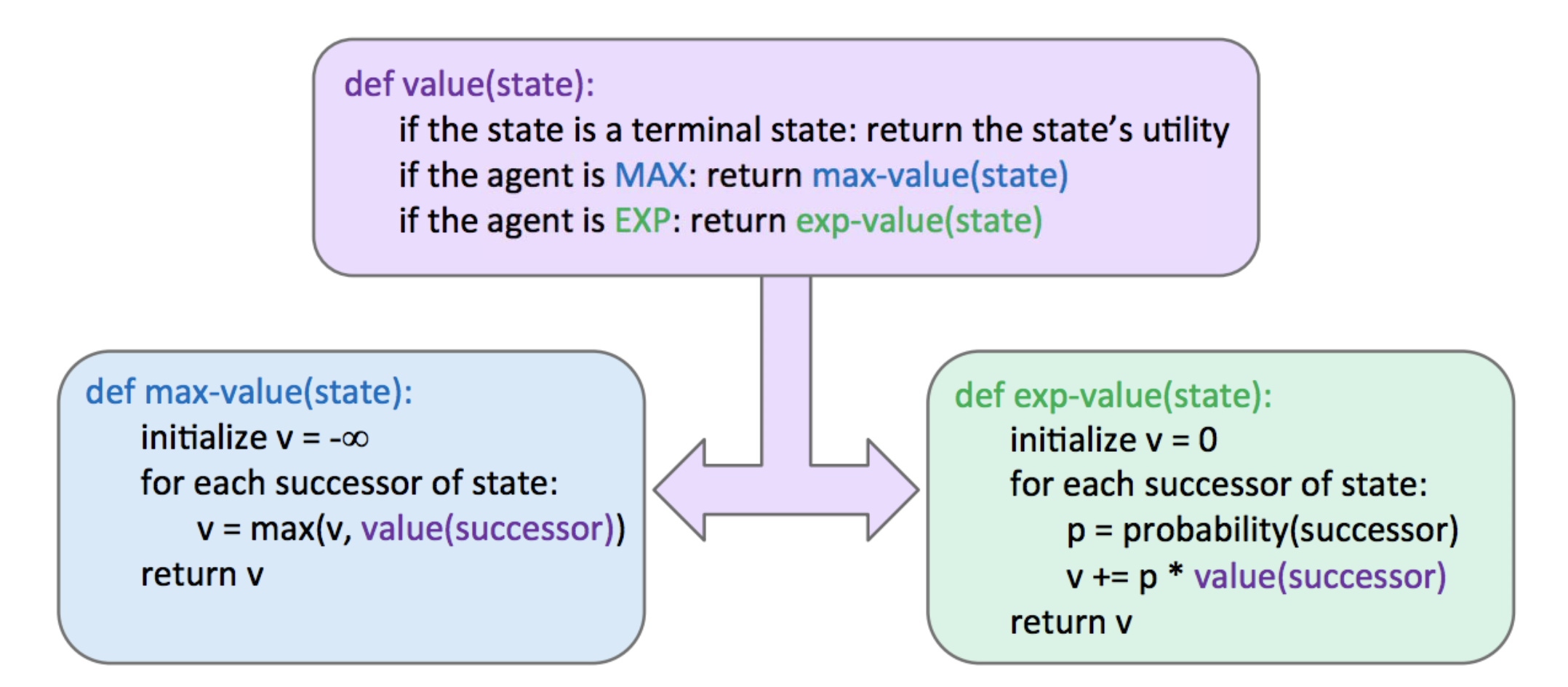
- 想法:把“最小化节点”换成“chance nodes(随机节点)”,用期望值代替最小值。 Markov decision processes 将有更详细的讨论具有内在随机性的内容
Defination
伪代码
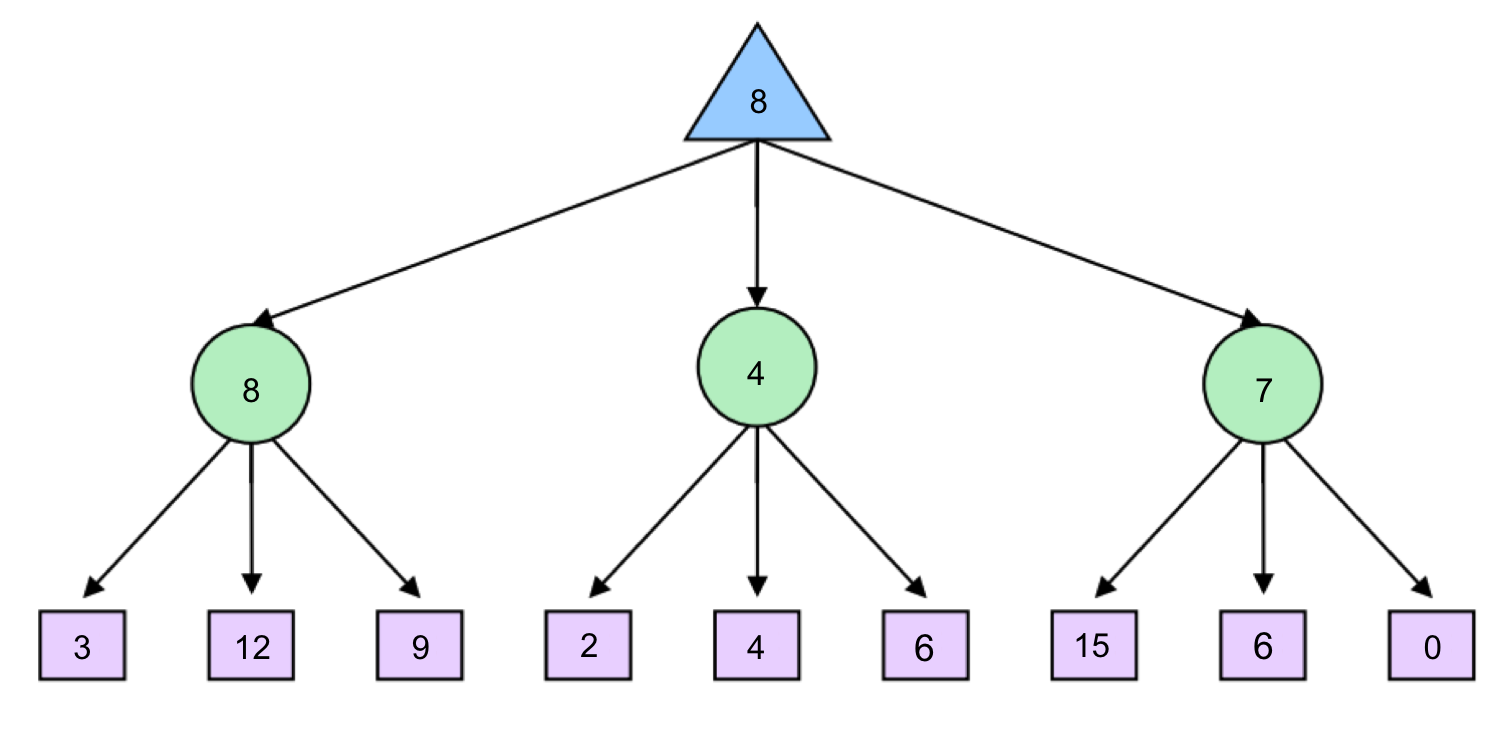
Example
Important Truth!
As a final note on expectimax, it’s important to realize that, in general, it’s necessary to look at all the children of chance nodes – we can’t prune in the same way that we could for minimax.Expectimax 一般不能像 minimax 那样做 α-β 剪枝(因为必须看所有子节点来计算期望,除非知道节点值的上下界)。
General games/Multi-agent utilities
- 并非所有游戏都是零和(zero-sum)。在多智能体情形,每个 agent 有自己的效用(utility tuple)。
- 每个 agent 在自己控制节点上最大化自己的分量,忽略别人的效用。最终根节点返回一个效用元组(例如
(5,2,5))。这种设置会自然产生“合作/折中”行为。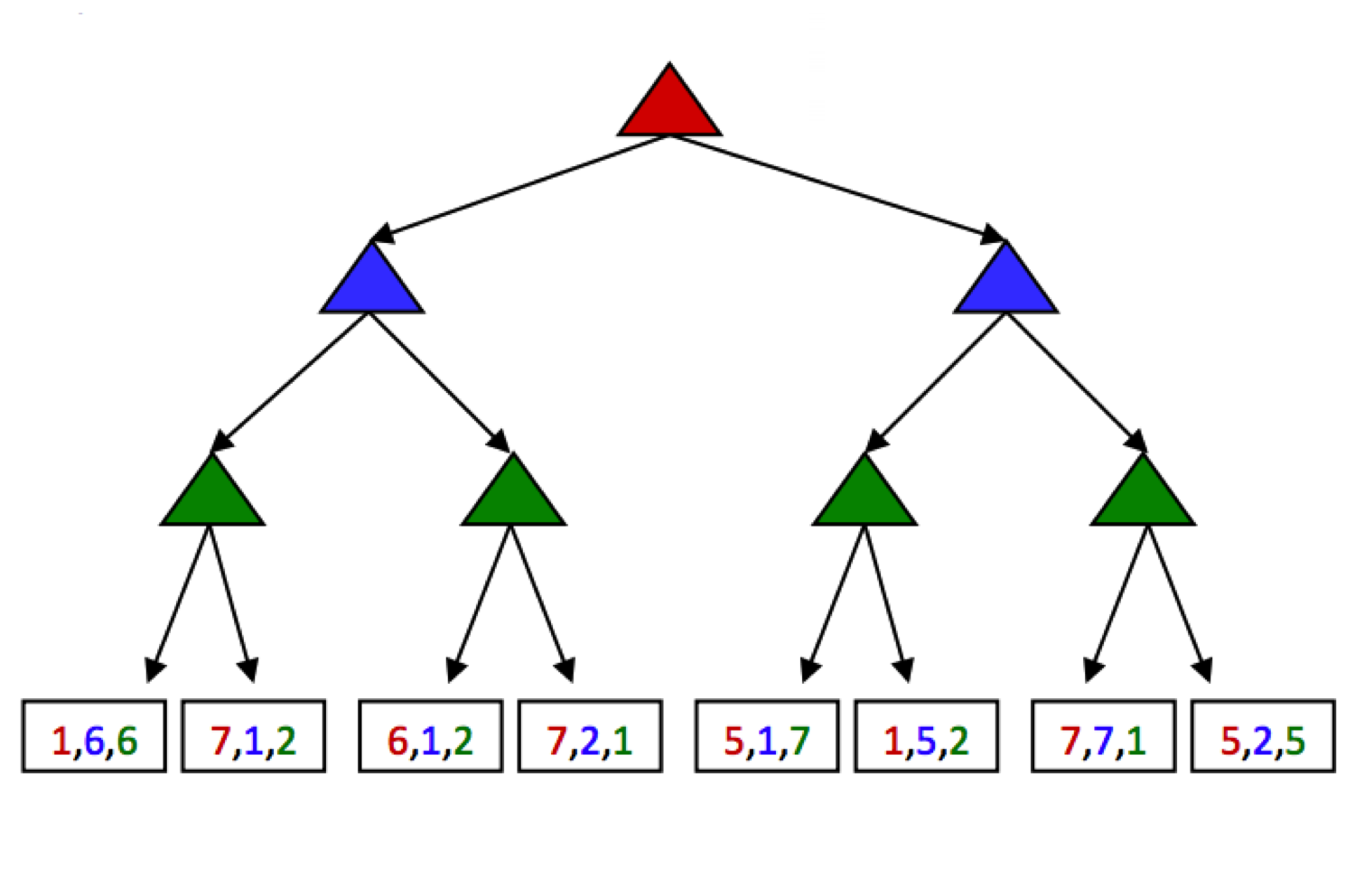
- 上图最终返回一个效用元组(5,2,5),具有多智能体效用的的博弈(General games with multi-agent utilities)是一个behaviour through computatiaon的一个很好的例子 #通过计算产生行为
Monte Carlo Tree Search
核心思想
- Evaluation by rollouts: From state s play many times using a policy (e.g. random) and count wins/losses. 统计胜率来估计该状态价值
- Selective search: explore parts of the tree, without constraints on the horizon, that will improve decision at the root.把计算资源集中在”有前途”或者”不确定”的分支上,而不是平均分
UCB1(上置信界)准则
- N(n):从子节点 n 做过多少次 rollout(样本数)。
- U(n):对于 Parent(n) 的赢的总次数(或者累积获利)。
- 第一项:当前估计(exploitation)。第二项:不确定性(exploration)。C 控制两者权重。
UCT算法步骤
1. The UCB criterion is used to move down the layers of a tree from the root node until an unexpanded leaf node is reached.
2. A new child is added to that leaf, and we run a rollout from that child to determine the number of wins from that node.
3. We update the numbers of wins from the child back up to the root node.- 1.Selection: 从根开始按 UCB 走下去,直到到达尚未展开的叶子节点
- 2.Expansion + Rollout: 在该叶子扩展一个新子节点,然后从这个新子节点执行一次或多次 rollout(用某策略玩到底),记录输赢
- 3.Backpropagation: 把 rollout 的结果沿路径回传,更新每个节点的 N 与 U 重复上述步骤很多次,最终选择访问次数N最大的子节点对应的动作
注意
Note that because UCT inherently explores more promising children a higher number of times, as N → ∞, UCT approaches the behavior of a minimax agent.随着样本数趋近无穷,UCT 的行为会逼近 minimax(因为更有前途的子树被反复探索)
Summary
- Minimax:当对手完全最优时适用,可用 α-β 剪枝加速;策略保守(worst-case)
- Expectimax:当对手随机或次优时用概率加权平均,结果更“平均化”;通常无法像 minimax 那样剪枝
- MCTS / UCT:当分支因子极大或没有明确定义的启发评估函数时,用随机模拟 + 选择性扩展来估计最优动作;易并行化